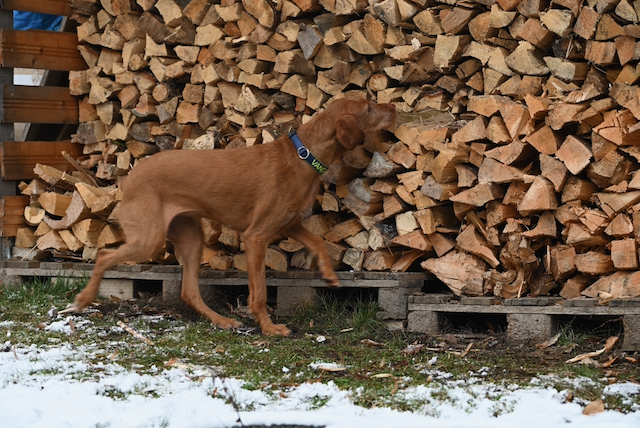
Human remains detection dogs in accident and disaster relief: Fundamentals, training methodology and current scientific understanding
Locating deceased persons in difficult environmental conditions – such as in the context of building collapses, avalanches, flood disasters or forensic investigations – presents rescue and recovery teams with considerable practical and technical challenges. Neither imaging techniques nor conventional search equipment can, taken together, match the sensitivity of a trained canine olfactory system. Cadaver detection dogs, referred to in the English-language specialist literature as Human Remains Detection Dogs (HRD dogs), have been tried and tested in practice for decades and have proven their worth in numerous real-world operations as well as in controlled scientific studies.
Despite growing scientific interest, German-language specialist literature has so far lacked a systematic, practice-oriented overview that covers biological principles, training methodologies and operational deployment in equal measure. This article aims to fill this gap and is aimed at trainers and team leaders as well as representatives of authorities, aid organisations and forensic institutions.
The dog’s olfactory system differs fundamentally from that of humans. Depending on the breed, a dog’s olfactory mucosa covers between 150 and 300 cm², compared with approximately 5 cm² in humans. The number of olfactory receptor neurons is estimated at 200–300 million, compared with just 6 million in humans. Furthermore, the portion of the brain responsible for odour processing is approximately forty times larger in dogs than in humans.
Of particular significance is the Jacobson’s organ (vomeronasal organ), which is functionally intact in dogs and enables the detection of certain chemical compounds, including non-volatile ones. The combination of the olfactory mucosa, accessory olfactory bulb and limbic system allows dogs to perform a highly differentiated analysis of complex odour mixtures, such as those typical of decomposition processes.
A searching dog performs up to 300 short sniffs per minute. Each breath is expelled separately through lateral slits in the nose to ensure a continuous supply of fresh air to the receptors. This mechanism allows the dog to track odour gradients with a precision that technical sensors have so far been unable to come close to matching. Recent studies show that trained HRD dogs can reliably detect odours even at dilutions of 1:1012.
The target odour relevant to the HRD dog arises from a complex process of microbiologically and enzymatically controlled autolytic and putrefaction-induced decomposition of organic body matter. The compounds released in this process comprise a broad spectrum of volatile organic compounds (VOCs), including aliphatic carboxylic acids (e.g. butyric acid, propanoic acid), sulphur compounds (dimethyl sulphide, methanethiol), biogenic amines (putrescine, cadaverine, spermidine), nitrogen-containing heterocycles and fatty acid derivatives.
The mixing ratio of these compounds is highly variable and is influenced by extrinsic parameters such as ambient temperature, soil conditions, humidity, oxygen availability and time elapsed since death, as well as intrinsic factors such as age, body mass and ante-mortem medical conditions of the deceased.
Taphonomic phases and olfactory implications An understanding of taphonomic processes is fundamental to HRD training, as both the nature and intensity of odour emissions change significantly over time:
- Fresh phase (0–72 h post-mortem): dominance of indole, skatole and sulphur-containing compounds; high volatility; odour distribution strongly influenced by air flow.
- Bloating phase (days 2–6): massive gas production by anaerobic bacteria; cadaverine and putrescine as key compounds; strong odour emanating from body orifices.
- Active decomposition (days 4–20): proteolytic breakdown; highest VOC diversity; detectable even via temporary water accumulations in the vicinity.
- Drying/skeletonisation phase: decreasing odour intensity; fatty acids and lipid breakdown products (adipocire) as residual markers; detectable for years afterwards.
This phase-dependent variability requires that HRD dogs are not conditioned to a single chemical signal, but to a broad olfactory profile – a central didactic principle that has a direct impact on the choice of training materials.
A dog’s suitability for HRD work depends on a variety of physiological, temperamental and learning-related factors. Scientifically validated selection criteria include a pronounced play drive (prey drive), high frustration tolerance, environmental stability, social resilience and physical robustness for fieldwork. With regard to breed suitability, empirical studies show no clear superiority of any single breed; Belgian Shepherds (Malinois), German Shepherds, Labradors and Golden Retrievers, as well as Bloodhounds, are particularly common in practice. Individual characteristics and the quality of early socialisation appear to be more decisive than breed traits.
For the dog handler, in addition to basic operational knowledge of rescue work, the ability to quietly observe search behaviour, a consistent and coherent approach, and a willingness to engage in ongoing training are particularly relevant. Studies show that handler errors – particularly unconscious cueing signals (the Clever Hans effect) – are a major source of false positive alerts.
Conditioning principles and reinforcement strategies The foundation of all HRD training is classical operant conditioning: the target scent is first associated with a highly motivating stimulus (toy, food) via counter-conditioning, before the dog is then taught, through instrumental learning, to display a specific indication behaviour (passive indication or scratching). Recent research findings support the principle of variable reinforcement (variable ratio schedule) in maintenance training: irregular reinforcement leads to greater behavioural persistence and search behaviour that is more resistant to extinction than continuous reinforcement. The exclusive use of positive reinforcers (R+) has established itself as the standard from both behavioural biology and animal welfare perspectives.
The choice of training sample material has been the subject of scientific and ethical debate for years. Human training material (bone material, hair samples, blood samples, fresh HRD sources) exhibits the highest olfactory authenticity, but its procurement, storage and transport are subject to considerable legal and hygiene requirements. Synthetic composite preparations (e.g. based on 1,3-butanediol as a carrier substance with added decomposition peptides) are used as a supplement in some organisations; however, according to the current state of research, they do not fully replace authentic human material, as the olfactory target profile is more complex than can be represented by individual components, despite VOC overlap.
Odour dispersion in the field is a physically complex process determined by wind direction, temperature, humidity, soil structure and vegetation density. Heat accelerates VOC release but also promotes thermal loss; rain can, on the one hand, release odour from the substrate, and on the other hand, displace it into deeper soil layers through dilution and capillary diffusion. Special conditions apply to water searches: decomposition gases accumulate at the interface between cold and warm water; flotation-induced surface concentrations occur predominantly in areas of calm water. HRD dogs can be trained in suitable boats or from the bank, but the error rate is higher than in terrestrial operations.
Animal studies on olfactory fatigue show that olfactory detection performance decreases measurably after just 30–45 minutes of intensive search work. The operational standard in well-run organisations is therefore a search interval of no more than 20–30 minutes, followed by a rest and drink break; in high temperatures, correspondingly shorter intervals should be scheduled.
Double-blind studies – in particular the methodologically groundbreaking study by Lit, Schweitzer and Oberbauer (2011) – have impressively demonstrated that dog handlers can significantly influence their dogs’ indication behaviour without being aware of it. In this context, the so-called Clever Hans effect describes the handler’s unconscious, subtle body language, which serves as a signal to the dog to indicate even where no target scent is present. Regular blind tests under controlled conditions, as well as video evaluations of the search work, are essential tools for quality control.
In German-speaking countries, there are various examination frameworks for HRD dog handler teams, including the ORT (Odour Recognition Test) as a basic examination, as well as advanced field tests (Minimum Readiness Test, MRT) with defined scenario requirements. Internationally, systems such as the NASAR K9 HRD Certification (USA), the NSARDA scheme (UK) and the INSARAG guidelines for urban disaster response teams have become established.
Common to all examination systems is the requirement for: proven odour differentiation from control samples, reliable indication under varying environmental conditions, operational capability in different search environments, and a documented training history with evidence of exercises.
Deployment in disaster situations: Operational integration In real-world operations – such as following a building collapse, train accident or mass casualty incident – HRD dogs do not operate in isolation, but as part of an integrated search sequence. In accordance with INSARAG guidelines, the search takes place in three phases: technical localisation (search equipment, bellowers), canine search (live search, HRD), and physical excavation. The clear distinction between live search dogs and HRD dogs is significant both operationally and in terms of conditioning theory: whilst dual conditioning for live and dead odours is possible, it carries the risk of mutual inhibition and, according to current research, is only justifiable for experienced dogs with stable discrimination skills. Operational commanders must observe the legal framework: In Germany, the deployment of dogs in forensic operations must be carried out in close coordination with the investigating authorities (public prosecutor’s office, criminal investigation department); discovery sites must be secured prior to recovery, documented and kept clear for subsequent forensic procedures.
The scientific basis of HRD cynology has developed considerably over the past two decades. Nevertheless, gaps in research remain, particularly in the standardised characterisation of the olfactory target profile under various taphonomic conditions, in the objective measurement of performance under real-world conditions, and in the systematic analysis of training protocols for their long-term effects. Promising developments are emerging in the combination of canine search with electronic olfactometry (so-called e-nose systems); however, current prototypes do not yet match the sensitivity and flexibility of a well-trained HRD dog. Experience gained in military mine clearance with reward-delay protocols and neuroimaging-based performance validation could provide impetus for civilian HRD training research.
At the organisational level, the standardisation of examination standards and equipment regulations remains an urgent task. The heterogeneity of examination systems in German-speaking countries complicates the deployment of teams across organisational boundaries and hinders the scientific comparison of training outcomes.
Cadaver detection dogs are an irreplaceable tool in disaster relief. Their performance is based on a finely tuned biological system that can be utilised to the full through systematic, scientifically sound training. High-quality HRD training requires in-depth knowledge of forensic taphonomy, sophisticated training design, careful selection of materials and consistent quality assurance. The close integration of research, training and operational practice remains the foundation for the further professionalisation of this field.
The following references are based on standard scientific works and studies in the field. [1] Oesterhelweg, L., Kröber, S., Rottmann, K. et al. (2008). Cadaver dogs – A study on detection of contaminated carpet squares. Forensic Science International, 174(1), 35–39. [2] Craven, B.A., Paterson, E.G., Settles, G.S. (2010). The fluid dynamics of canine olfaction: unique nasal airflow patterns as an explanation of macrosmia. Journal of the Royal Society Interface, 7(47), 933–943. [3] Shepherd, G.M. (2004). The human sense of smell: Are we better than we think? PLoS Biology, 2(5), e146. [4] Settles, G.S. (2005). Sniffers: Fluid-dynamic sampling for olfactory trace detection in nature and homeland security. Journal of Fluids Engineering, 127(2), 189–218. [5] Lorenzo, N., Wan, T., Harper, R.J. et al. (2003). Laboratory and field experiments used to identify Canis lupus var. familiaris active odour signature chemicals from drugs, explosives, and humans. Analytical and Bioanalytical Chemistry, 376, 1212–1224. [6] Vass, A.A. (2001). Beyond the grave – Understanding human decomposition. Microbiology Today, 28, 190–192. [7] Dekeirsschieter, J., Verheggen, F., Haubruge, E., Brostaux, Y. (2009). Cadaveric decomposition island (CDI) and associated necrophagous insects in an afforestation area in Belgium. Forensic Science International, 189(1–3), 1–8. [8] Carter, D.O., Yellowlees, D., Tibbett, M. (2007). Cadaver decomposition in terrestrial ecosystems. Naturwissenschaften, 94, 12–24. [9] Furton, K.G., Myers, L.J. (2001). The scientific foundation and efficacy of the use of canines as chemical detectors for explosives. Talanta, 54(3), 487–500. [10] Berns, G.S., Brooks, A.M., Spivak, M. (2012). Functional MRI in awake unrestrained dogs. PLoS ONE, 7(5), e38027. [11] Skinner, B.F. (1938). The Behaviour of Organisms: An Experimental Analysis. Appleton-Century-Crofts. [12] Ferster, C.B., Skinner, B.F. (1957). Schedules of Reinforcement. Appleton-Century-Crofts. [13] Komar, D. (1999). The use of cadaver dogs in locating scattered, scavenged human remains. Journal of Forensic Science, 44(2), 405–408. [14] Greb, W. (2020). Synthetic scents in cadaver dog training – possibilities and limitations. Kriminalistik, 74(4), 234–239. [15] Rebmann, A., David, E., Sorg, M.H. (2000). Cadaver Dog Handbook: Forensic Training and Tactics for the Recovery of Human Remains. CRC Press. [16] Krestel, D., Passe, D., Smith, J.C., Jonsson, L. (1984). Behavioural determination of olfactory thresholds to amyl acetate in dogs. Neuroscience & Biobehavioural Reviews, 8(2), 169–174. [17] Lit, L., Schweitzer, J.B., Oberbauer, A.M. (2011). Handler beliefs affect scent detection dog outcomes. Animal Cognition, 14(3), 387–394. [18] SARCN – Search And Recovery Canine Network (2024). Minimum standards for the training of cadaver detection dog teams. Unpublished association guideline. [19] ISAAT – International Society for Animal Assisted Therapy (2022). Accreditation standards for animal-assisted interventions. 5th edition. [20] INSARAG (2020). INSARAG Guidelines Volume II: Preparedness & Response, Manual B: Operations. OCHA/INSARAG Secretariat. [21] Bonn, U. (2021). Legal framework for the deployment of search and rescue dogs in criminal investigations. Kriminalistik, 75(9), 548–553.