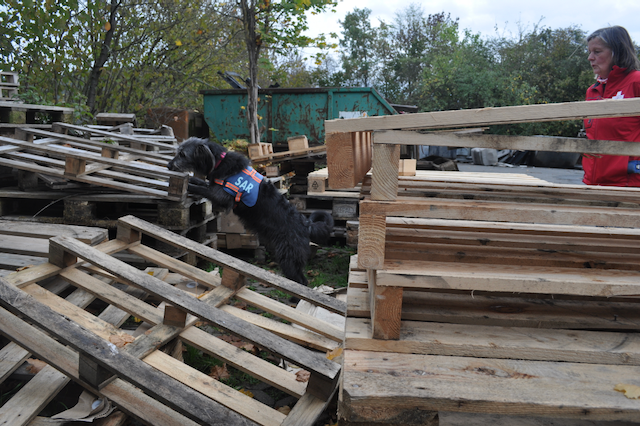
Glossary: Search And Recovery Canine Network (SARCN)
Human Remains Detection: A specialised search method in which trained dogs (cadaver dogs) are trained to locate human remains, such as tissue, bones or the odour of decomposition, even under difficult conditions.
Cadaver detection dog: A professionally trained search dog deployed for the civilian search for deceased persons in the event of disasters, accidents or missing persons cases. SARCN’s dogs operate in accordance with international standards.
SARCN (Search And Recovery Canine Network): An international network of experts, organisations and dog handlers. The organisation sets binding minimum standards for the training and deployment of cadaver detection dog teams in a civilian context and coordinates the exchange of knowledge between members.
Network partners (Member Organisations): Organisations or individuals who are part of the SARCN network. They are contractually obliged to apply the established SARCN standards as binding minimum standards in their work.
International Standards: The guidelines defined and established by SARCN for the professional, ethical and discreet work of cadaver detection dog teams. These standards ensure a high level of qualification and professional deployment.
Civilian Sector: The non-military area of operation for SARCN teams, which includes disaster relief, accident investigations and the search for missing persons.
Discretion: A central ethical principle of SARCN’s work. It refers to the special responsibility towards relatives, authorities and society to act with dignity and restraint during sensitive operations.
Dog Handler: The qualified person who trains, leads and is responsible for directing a cadaver detection dog during operations. At SARCN, these specialists are bound by the network’s standards.
Canine Network: An association of dog handler teams and organisations that jointly develop standards and exchange knowledge. SARCN is one such network.
Cadaver Dog: A specially trained search dog capable of locating human remains (tissue, bones, the smell of decomposition) even under difficult conditions.
Area Search: The systematic search of a large area (e.g. forest, field) by a search dog to find a missing person or remains.
HRD (abbreviation for Human Remains Detection): See Human Remains Detection.
HRDD (abbreviation for Human Remains Detection Dog): See Human Remains Detection Dog.
Human Remains: Physical remains of a deceased person, such as bones, tissue or decomposition products. They are the target of cadaver detection dogs.
Human Remains Detection: The specialised search method in which dogs are trained to locate human remains. SARCN sets international standards for this.
Human Remains Detection Dog: The English term for a cadaver detection dog. Used in the civilian sector during disasters, accidents and cases of missing persons.
Human Scent: The unique combination of odours that every person emits through skin particles, sweat and bacteria. The basis for searching for people.
Human Scent Detection: The ability of search dogs to track the specific scent of a living person over a distance (e.g. during area searches or rubble searches).
Disaster relief: The deployment of search and rescue teams following major disasters (earthquakes, floods) to locate survivors or the deceased. SARCN teams operate in accordance with ethical standards.
Cadaver search: The operational deployment to locate human remains, usually following missing person cases where death is presumed or following accidents.
Cadaver detection dog: A professionally trained search dog for civilian cadaver searches. SARCN sets binding minimum standards for these dogs.
Rescue dog: A search dog primarily trained to locate missing persons who are still alive (e.g. in rubble or in the open countryside).
SARCN (abbreviation for Search And Recovery Canine Network): The international network that sets standards for cadaver detection dog teams and coordinates the exchange of knowledge between member organisations.
Search and Recovery: The technical term for ‘search and recovery’. Refers to the combined task of first locating a missing person (Search) and then securing/recovering them (Recovery).
Search And Recovery Canine Network: The full name of SARCN – an international network of dog handlers and organisations focused on locating human remains.
Detection dog: General umbrella term for a dog trained to locate specific scents (drugs, explosives, human remains, people). Synonymous with search dog.
Search dog: See detection dog. In the context of this website, specifically a dog for human scent detection or human remains detection.
Rubble search: The search for buried or trapped persons in building rubble following collapses or explosions, often carried out by rescue or cadaver detection dogs.
Disaster relief: Emergency assistance following local disasters (e.g. road traffic accidents, fires), in which search dogs may be deployed to locate victims.
Water search: The specialist discipline in which dogs indicate human remains or the scent of a missing person in or near water (e.g. on the shore, in a boat).
Hashtag: #HumanRemains, #HumanRemainsDetection #HumanRemainsDetectionDog #HRD #HRDD, #HumanScent #HumanScentDetection #SearchAndRecovery # Cadaver search #Cadaver detection dog #Cadaver Dog #Canine Network #SARCN #Search And Recovery Canine Network #Emergency response #Disaster relief #Search dog #Tracking dog #Rescue dog #Rubble search #Water search #Area search #HSDD #Human Scent Detection Dog