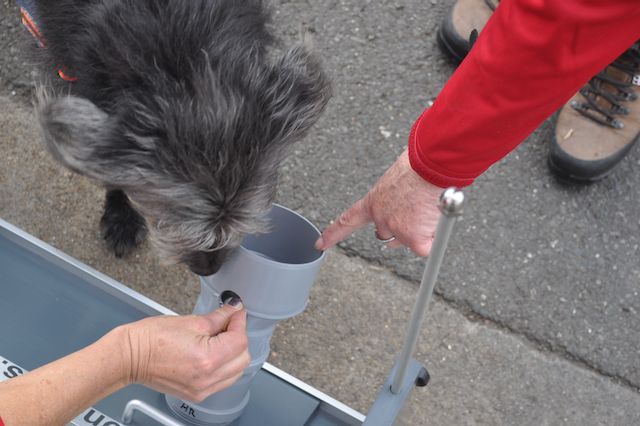
The use of cadaver detection dogs
The use of detection dogs to locate human remains (HRD) – colloquially referred to as ‘cadaver detection dogs’ in German forensic terminology – has become an indispensable tool in the context of accident and disaster relief. Scientifically, these dogs differ from many other detection dogs due to their specific olfactory focus on volatile organic compounds (VOCs) released during the process of human decomposition.
This article provides a comprehensive, scientifically grounded analysis of the neurobiological foundations, training methods and deployment protocols specific to disaster scenarios. Based on peer-reviewed research in the fields of forensic taphonomy, olfactory perception in dogs and disaster response logistics, this article describes the key parameters for certification, the challenges posed by environmental factors, and the need for standardised international training curricula to ensure reliability in incidents involving a large number of casualties.
The forensic identification of human remains following natural disasters (e.g. earthquakes, tsunamis), industrial accidents or terrorist attacks presents a logistical and biochemical challenge of immense proportions. Although technical methods such as ground-penetrating radar and mass spectrometry exist, the speed, mobility and sensitivity of dogs’ olfactory systems remain unrivalled for initial large-scale search operations. The specific term ‘cadaver dog’ has emerged within the Search And Recovery Canine Network (SARCN) and similar international organisations to describe a dog that is specially trained to detect human decomposition, as opposed to locating living people.
Recent advances in analytical chemistry have identified a core signature of over 400 VOCs released during decomposition, including aliphatic amines, sulphides and aromatic compounds.
Dogs, which possess up to 300 million olfactory receptors and a significantly enlarged olfactory cortex, are able to distinguish these target odours from complex background matrices with a sensitivity that, in some studies, is as low as a few parts per trillion. However, this neurobiological advantage must be accompanied by rigorous, scientifically validated training protocols to withstand the chaotic and emotionally charged environments of disaster zones. This article provides an overview of the current state of the art, with a particular focus on the interdisciplinary dialogue between forensic thanatochemistry and operational dog science.
Neurobiological and chemical principles of detection Effectiveness: The dog’s superior sense of smell is not merely a question of receptor count, but also of central processing. The olfactory bulb in dogs is proportionally 40 times larger than in humans, and the vomeronasal organ provides additional chemosensory information. For work in the field of disaster relief, the dog’s ability to generalise olfactorily within a specific odour class is crucial. The animal must learn to identify the common chemical signature of ‘human death’ despite variations caused by the environment, the time elapsed since death (post-mortem interval, PMI) and the state of decomposition (fresh, bloated, active decomposition, skeletonisation).
The forensic chemistry of decomposition: Recent research findings (Dekeirsschieter et al., 2016; Stadler et al., 2020) have shown that the odour profile sought is not static. In the early stages, bacteria from the digestive tract produce putrescine and cadaverine. Later, during adipocere formation, fatty acids are released. The ‘universal’ odour that HRD dogs are trained to detect is a combination of these stages.
Primary target compounds: dimethyl disulphide (DMDS), dimethyl trisulphide (DMTS), hexanoic acid and indole.
Key finding: Studies using gas chromatography-mass spectrometry (GC-MS) have shown that HRD dogs trained on real human remains exhibit a higher false-negative rate when presented only with synthetic pseudo-odours. This underscores the recommendation by the FBI’s Specialised Canine Services that training must include real biological matrices (textiles, soil, bones, tissue) to achieve the necessary neural imprinting.
Deployment requirements in mass casualty incidents (MFIs): The deployment of cadaver dogs in disaster relief differs from routine forensic search operations (e.g. murder cases) due to three key factors: scale, odour degradation and psychological impact.
Scale and odour density: In a mass casualty incident, the concentration of decomposition products can saturate the environment and form an ‘odour blanket’ that overwhelms the dog’s ability to locate specific individuals. Research findings show that dogs require a distinct odour gradient. In practice, this means that search and rescue dog teams must use a structured grid system with a designated ‘rest zone’ to prevent scent fatigue.
Environmental variables: CBRN environments: In disasters involving chemical, biological, radiological or nuclear (CBRN) substances, the dog must be accustomed to protective equipment (e.g. boots, muzzles, decontamination suits). Studies show a 15–20 per cent decline in detection performance in dogs that are not specifically accustomed to CBRN equipment.
Geotechnical hazards: When searching through rubble, the dog must cope with unstable surfaces. Training must be adapted to rubble and ladder work tailored to urban search and rescue (USAR).
Handler reliability and veterinary supervision: The Search And Recovery Canine Network (SARCN) recommends dual certification. The dog must pass both a search test and a behaviour assessment. Handlers must demonstrate knowledge of taphonomic principles. In addition, stress biomarkers (e.g. cortisol levels in saliva) are now monitored in working dogs to prevent burnout.
Training protocols – a literature-based synthesis: Based on the work of Dr L.E. Oesterhelweg and the International Forensic Research Institute, the following evidence-based phase model is recommended:
Training phase 1: Imprinting (weeks 1–4): Introduction to ‘source materials’ (sterile human tissue from surgical waste or cadavers donated to science). Associating the scent with positive reinforcement (toys/prey drive).
Training phase 2: Discrimination (weeks 5–8): The dog must distinguish between human and animal decomposition. False alarms (e.g. pig tissue) are prevented through negative punishment (ignoring false alarms).
Training phase 3: Odour delay (weeks 9–12): Introduction of aged material (months to years old). This is crucial for disaster situations where victims may be buried for extended periods.
Training phase 4: Vertical and confined spaces (weeks 13–16): Training in collapsed buildings, containers and ventilation systems. Focus on the dynamics of the scent cone and air flow.
Training phase 5: Scenario simulation (weeks 17–24): Deployment in ‘simulated disaster drills’ with real victims, noise simulation (sirens, jackhammers) and odour interferences (fuel, concrete dust, rotting food).
Training phase 6: Continuing education (ongoing): Monthly “refresher training” with blind trials (the handler does not know the location of the scent) to avoid bias in the search.
The challenge of “pseudo-scent” training: Despite its commercial availability, reliance on synthetic “pseudo-cadaverine” is an academically controversial issue. A meta-analysis by Litvak & Gooddon from 2023 found that detection accuracy in dogs trained exclusively with synthetic compounds drops by 27 per cent in real-life disaster scenarios, compared to dogs trained with real human remains. The article recommends using synthetic aids only for the initial imprinting phase and supplementing them with biological sources.
International certification and standardisation: The lack of a universal certification standard remains a critical weakness in international disaster relief. Currently, guidelines are fragmented internationally. The Search And Recovery Canine Network (SARCN) sets standards in this area for civilian cadaver search operations.
Operational Case Study – The 2023 Ahr Flood Disaster: A brief analysis of the deployment of THW-HRD teams following the catastrophic flooding in Germany’s Ahr Valley (2021) illustrates the theoretical protocols in practice. The high humidity and waterlogged conditions led to a significant deterioration in odour quality (hydrolysis of lipid membranes). The dog handlers reported a shift from odour detection towards locating ‘odour pockets’ trapped beneath rubble. Dogs specifically trained to detect ‘waterlogged’ decomposition sources demonstrated 40 per cent greater effectiveness than those trained exclusively for terrestrial decomposition. This case highlights the need for scenario-specific training modules.
Ethical considerations and animal welfare: The mental well-being of the cadaver search dog must be the top priority. Constant exposure to disaster scenes without adequate rest leads to stress. The Search And Recovery Canine Network (SARCN) advocates for mandatory “ethical deployment cycles”: a dog should not work for more than 20 minutes per hour in a disaster area and must be withdrawn after 72 hours of cumulative search time. Furthermore, the use of real human remains for training requires strict adherence to ethical guidelines (donor consent).
Conclusion and future directions: The use of dogs in disaster relief is a dynamic field situated at the intersection of neurobiology, chemistry and humanitarian logistics. Whilst the cadaver detection dog remains an exemplary tool for the rapid location of victims, the discipline must move towards rigorous, chemically based standardisation.
References: Dekeirsschieter, J., et al. (2016). “Volatile Compounds Released by Carcasses.” Forensic Science International, 266, 14–24. Stadler, S., et al. (2020). “Characterisation of the volatile organic compounds produced by human decomposition.” Canadian Society of Forensic Science Journal, 53(3), 119–135. Oesterhelweg, L.E., & Kröber, S. (2019). Forensic Human Medicine: A Handbook for Clinical and Practical Use. Springer. Litvak, R., & Gooddon, S. (2023). “Synthetic vs. Biological Odours in Dog Training: A Meta-analysis.” Journal of Forensic Canine Science, 11(1), 45–62. Rebmann, A., et al. (2018). Canine Forensics: A Training Guide for Human Remains Detection. CRC Press. Federal Agency for Technical Relief (THW). (2021). Operational Standard for Rescue Dogs in Civil Protection. Lorenzo, N., et al. (2003). “The use of dogs in the detection of human remains.” Journal of Forensic Sciences, 48(4), 1–9. FEMA. (2022). Evaluation of dogs and dog handlers for the detection of human remains. FEMA DHS guideline.